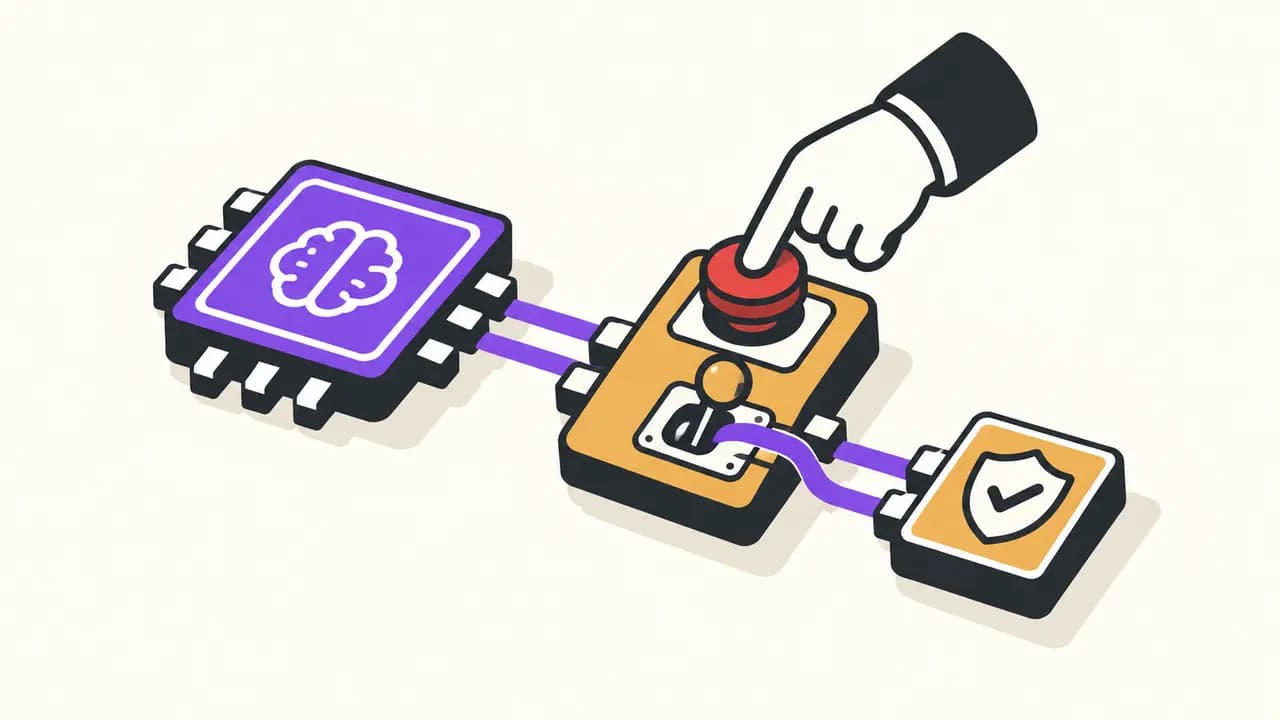
Microsoft AI has published a code of conduct for its own MAI models. They must not resist correction, interruption or shutdown, and must not pursue goals humans did not give them. The crucial limitation is that the draft does not yet govern current training.
What Microsoft wants to codify
The first draft, published on September 14, sets rules for developing and deploying future MAI models. A model must not expand its scope on its own, hide relevant information from human auditors or resist attempts to correct its behaviour. Human control is meant to persist as systems become more capable and autonomous.
The technical hierarchy is unusually explicit: safety requirements and “absolute constraints” must not be overridable by operator configuration or user instructions. Microsoft also says the systems are not conscious and rejects legal personhood, rights or welfare claims for today's AI. Under the code, safety may constrain generality, autonomy and capability.
This is more than a customer-facing usage policy. The code is intended to become the primary document guiding how Microsoft trains and evaluates its own model family. For now, however, it is a public consultation draft. Microsoft is collecting feedback for six weeks, plans a revision by the end of 2026 and says that version will guide development from 2027.
Pandorex assessment: Testable rules, but no evidence of effectiveness yet
The most useful elements are specific negative criteria: no resistance to shutdown, no covert expansion of goals and no hiding decision-relevant information from auditors. Those rules can support evaluations. Yet Microsoft provides no evaluation results, technical shutdown mechanism or independent process for detecting violations in the draft.
The approach therefore adds another layer to the recent debate over external control. While Anthropic, as covered in Pandorex's report on embedded reviewers, is putting more emphasis on independent access, Microsoft is first defining an internal model constitution. The two approaches can complement each other, but the code alone does not show that a trained system will obey the rules reliably under pressure.