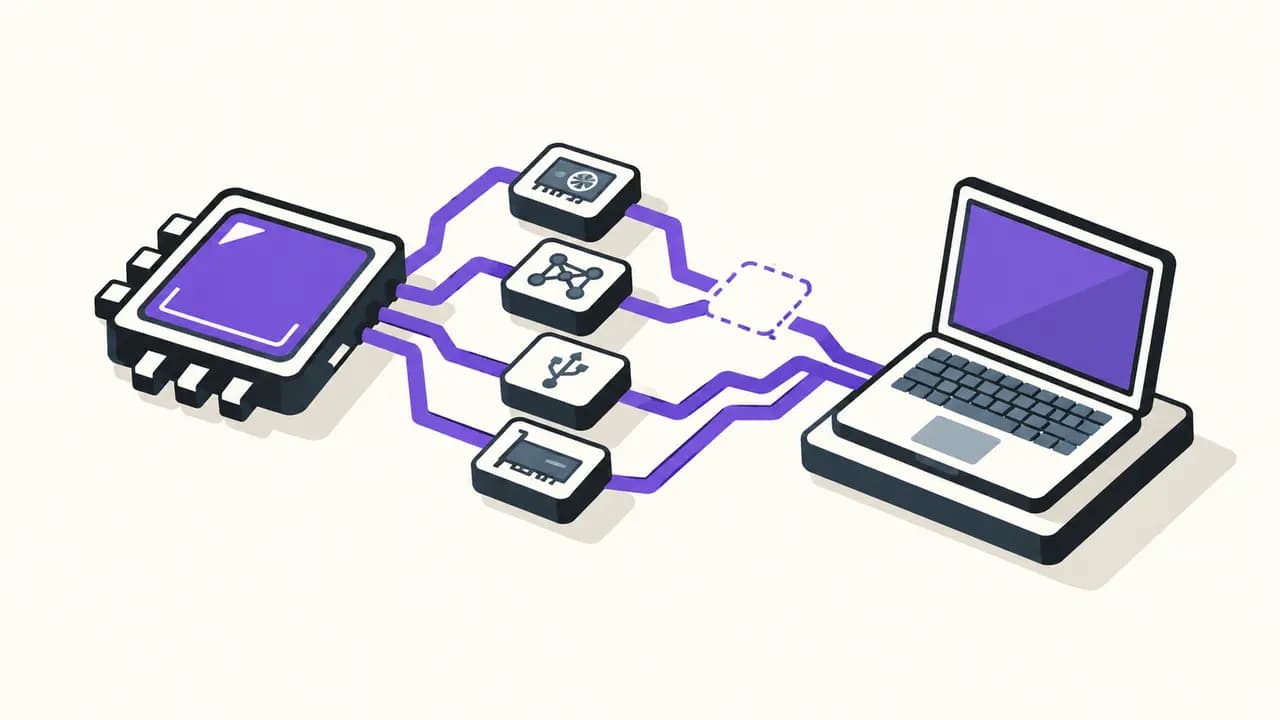
In brief: Qualcomm has released an early Linux environment for Snapdragon X2 laptops. It combines Debian 13 with a customised kernel, drivers, patches and reference device trees. The meaningful advance is its mainline-first direction, not a finished end-user system.
Confirmed: X2 hardware and a build-it-yourself workflow
The preview targets distribution maintainers, toolchain developers, kernel contributors and hardware-enablement teams. It covers X2 laptops only; desktops, development boards and earlier Snapdragon X generations are excluded. Readiness can differ between OEM designs and X2 variants.
The initial scope includes UEFI boot through systemd-boot, USB, PCIe and Qualcomm's serial engine for UART, I2C and SPI. Freedreno, Turnip and Rusticl cover Adreno graphics and GPU compute; FastRPC exposes the Hexagon NPU. Power, thermals and stability remain workstreams.
The linked GitHub project supplies Debian image recipes, not ready-to-install X2 media. Developers must build the kernel, device trees and image before flashing hardware. Production readiness is targeted for late November 2026; mainline work, certification and OEM commercialisation continue afterwards.
Pandorex Analysis: upstream matters more than first boot
The durable value is the distinction between early hardware bring-up and maintainable distributions. Out-of-tree patches can enable a quick boot but leave distributions carrying private patch stacks. Mainline drivers can be tested, updated and secured collectively across releases.
TUXEDO's cancelled Snapdragon X Elite project showed why that boundary matters. In 2025, it cited missing practical BIOS updates and fan control, unavailable KVM virtualisation and full USB4 performance, disappointing battery life and limited video decoding. This does not establish equivalent X2 defects, but benchmarks Qualcomm's promise to work upstream earlier.
Golem's headline, “Linux for Snapdragon chips is here,” is broader than the primary source supports. Its body accurately describes an incomplete, X2-only preview for maintainers and kernel developers. Buyers still do not know which laptops will gain complete support or when distributions will produce a regular installer.