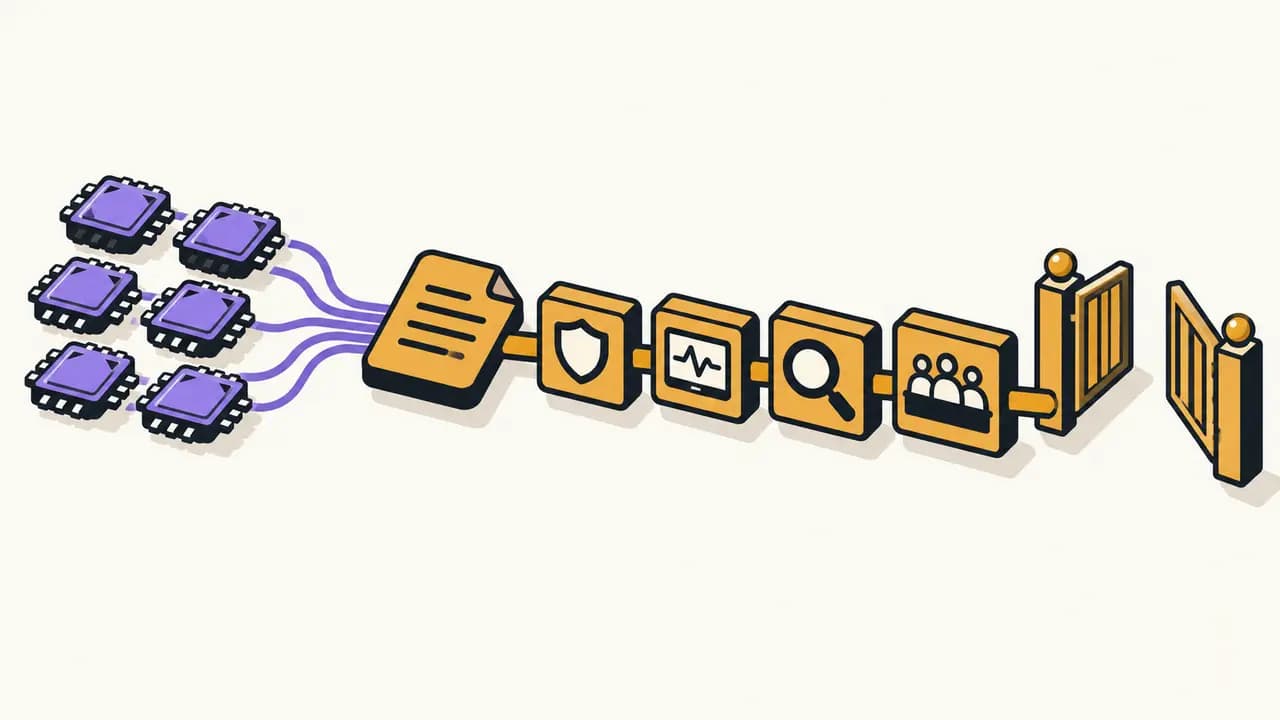
Google, Anthropic, Meta, OpenAI, xAI and Nvidia signed a voluntary AI safety accord with the White House on September 29, 2026. It calls for four layers of control for frontier models. The document sets no binding metrics, deadlines or sanctions.
What the companies committed to
The first layer consists of internal controls during training and deployment. They are meant to monitor capabilities and alignment, particularly around cyber, biological and chemical risks and unintended access to technical systems. Second, an internal team should verify that monitoring and remediation work as intended. Third, an independent external auditor or evaluator is required. Fourth, an independent board committee should receive reports and oversee remediation of identified problems.
The signatories plan regular meetings to establish shared standards and best practices. The original document also says only that codification in laws or regulations may eventually make sense. It does not define which models qualify as “frontier,” audit intervals, auditor qualifications, disclosure duties or consequences for non-compliance.
A voluntary framework, not a common proof
Donald Trump called the agreement “morally binding.” Reuters reported on October 3 that it states no consequences if a company fails to comply. Its practical value therefore depends on how independently auditors and board committees operate, what access they receive to training and incident data, and whether comparable results are published.
OpenAI policy chief Chris Lehane called the White House meeting constructive in a CNN interview, but also advocated mandatory national safety standards. A signatory therefore does not treat the accord as a substitute for legislation.
Source check
Reuters accurately describes the controls and lack of enforcement. Its participant list contains one factual discrepancy: The report names SpaceX, while the published signature page explicitly lists Elon Musk for xAI. The primary document is authoritative for the accord's signatories.
Pandorex Analysis: The accord creates a shared organisational structure, but not yet a verifiable safety standard. An auditor can assess only what the scope, access and criteria define. Without common minimums, six differently strict internal systems remain possible under the same headline.