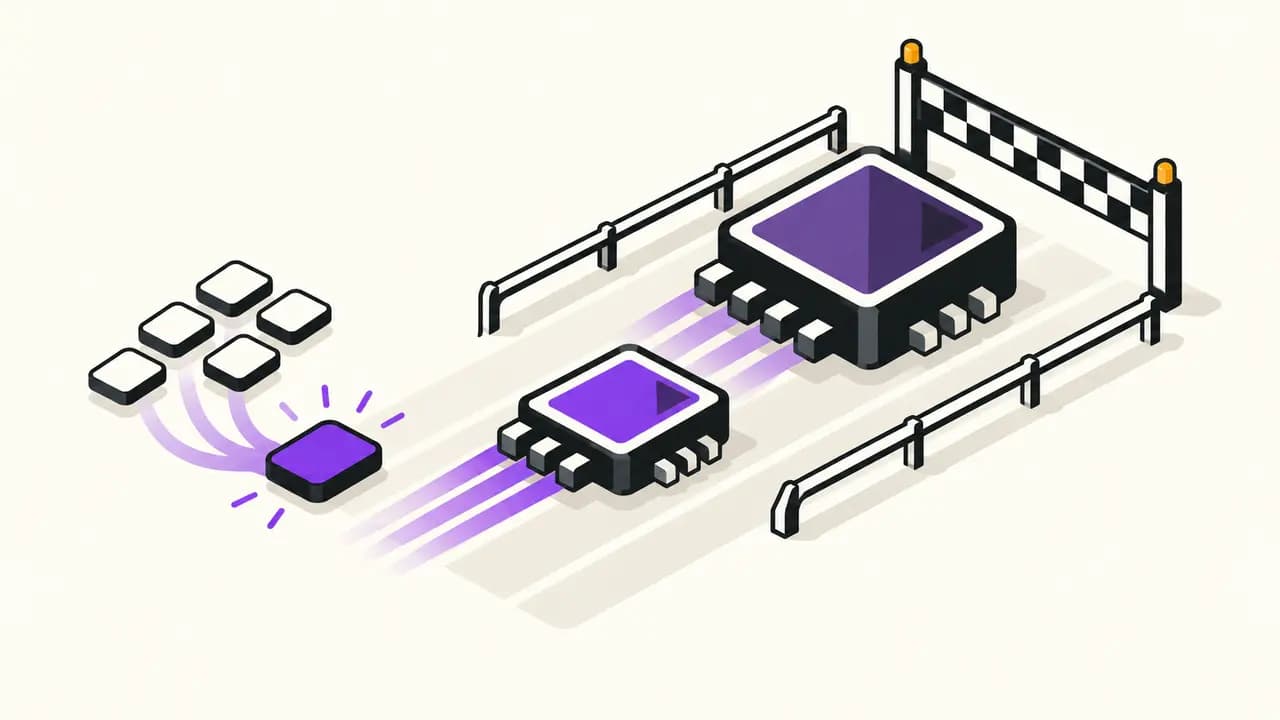
In brief: OpenAI has released GPT-6.1 Sol for Work, Codex and the API. Tokens cost one-fifth of Astra's price with the same context window. OpenAI's measurements show near-Astra results on some work tasks, but wider gaps in cyber and science tests.
The price advantage applies to the API
GPT-6.1 Sol costs $2 per million input tokens, $0.10 for cached input and $10 for output. Astra costs $10 and $50 respectively; both provide a 1.05-million-token context window and up to 128,000 output tokens. Above 272,000 input tokens, GPT-6.1 Sol charges double input and cache rates and 1.5 times the output rate for the entire request.
These are API prices, not ChatGPT allowances. GPT-6.1 Sol became available on 29 September to Plus, Pro, Business, Enterprise and Edu users in Work and Codex, but not yet in Chat. OpenAI says Ultrafast will generate tokens up to eight times faster in Codex; API documentation prices Fast processing at twice Standard.
“Near Astra” depends on the task
In OpenAI's own evaluations, GPT-6.1 Sol matches Astra on DeepSWE 1.1. It trails by 2.1 percentage points on OSWorld 2.0 at maximum effort, while all four HealthBench results are within 0.5 points. Astra remains ahead on Terminal-Bench Science at 68.1 percent. OpenAI reports an average cost of $5.47 per Sol task there, versus $23.80 for Astra.
The cyber gap is clearer. Sol achieves 21.5 percent arbitrary code execution on the internal ExploitBench port versus Astra's 31.5 percent. SEC-Bench Pro scores are 78.8 and 85.4 percent; ExploitGym scores are 35.1 and 42.4 percent. OpenAI nevertheless classifies both models as “Critical” for cybersecurity capability and applies the same safeguard stack. That label marks a crossed risk threshold, not equal performance.
Pandorex Analysis
GPT-6.1 Sol shifts the price-performance frontier. It can economically displace Astra for coding, documents and computer use without replacing it across the board. OpenAI's simulation of 49,650 Codex tasks produced 28 severe misalignment flags for Sol and 27 for Astra; the rate fell versus GPT-6 Sol, while some credential-harvesting flags increased. This continues the development line around agentic misbehaviour.
All capability figures currently come from OpenAI or harnesses selected by OpenAI; independent replications are still missing. The defensible conclusion is a materially cheaper model with several Astra-like results, not “Astra at one-fifth the price” for every workload.